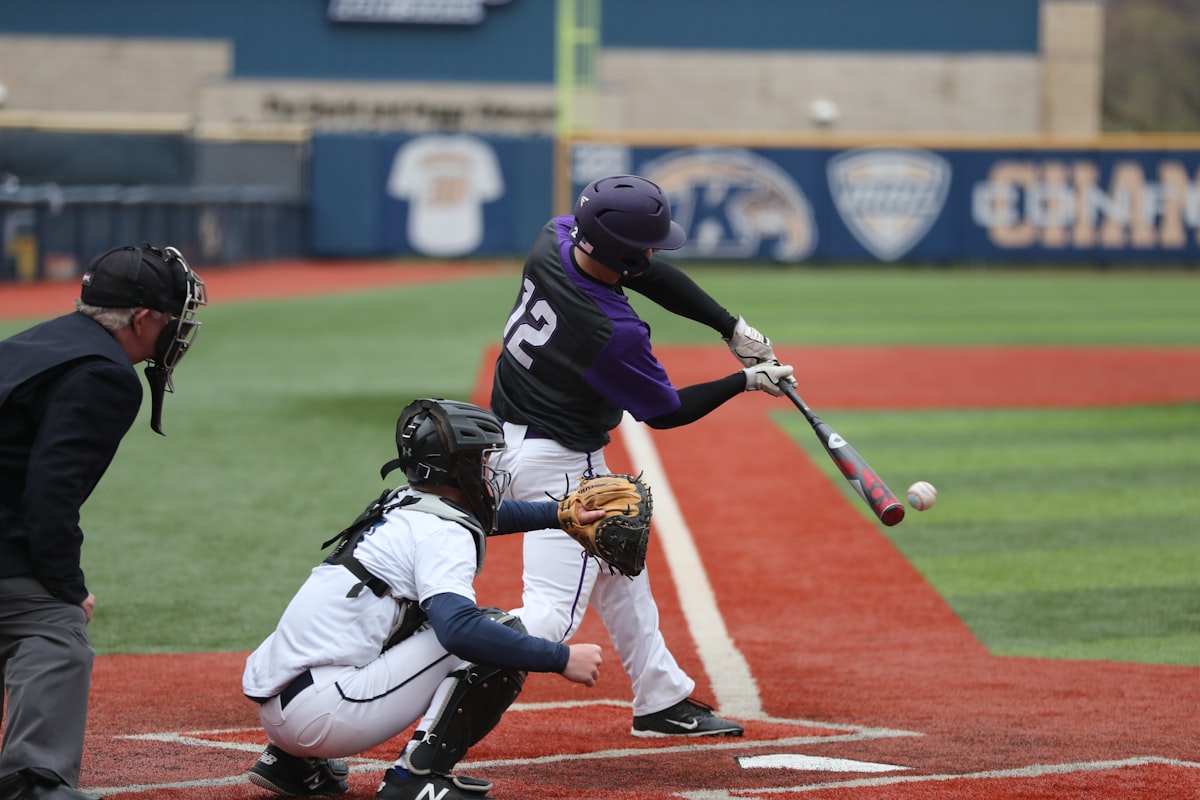
The Nine Numbered Positions on a Baseball Field
If you've got a game on, there's a pretty good chance that, if a double play is turned, an announcer will call it a "6-4-3 double play." It may seem confusing, but it's a faster way of basically saying "shortstop-to-second-to-first." The basic numbering of defensive positions was first seen in a scorecard from August 6, 1891, in a game between the Cleveland Spiders and New York Giants. In that scorecard laid directions on how to use it, labeling the defensive positions as numbers opposite each players' name. Things haven't changed much since then — besides the shortstop and third base numerical values swapping places — so when watching and hearing a game, know that this is what each player represents numerically:
Official Position Numbers
- Pitchers — No. 1
- Catchers — No. 2
- First basemen — No. 3
- Second basemen — No. 4
- Third basemen — No. 5
- Shortstop — No. 6
- Left fielders — No. 7
- Center fielders — No. 8
- Right fielders — No. 9
Here are some example plays, broken down into numerical orders you might hear on the radio or broadcasts:
- 6-4-3 double play: Shortstop fields the ball, throws to second baseman for the first out, who then throws to first baseman for the second out.
- 9-5 double play: Double play that deals with a right fielder catching a pop fly and getting a force out at third base.
- 4-6-3 double play: Second baseman to shortstop to first baseman.
The idea of baseball rules and position play can be traced back to Alexander Cartwright's development of the Knickerbocker Rules on September 23, 1845, who once famously said "let them hit it, you've got fielders behind you." These rules mention instances of players being deemed "out" when "the ball is in the hands of an adversary on the base, or the runner is touched with it before he makes his base." It's also worth noting that the Knickerbocker Rules outlawed "plugging," which is literally throwing the baseball at a runner and them being called "out" if so.

Infield Positions
Infielders field grounders, catch fly balls, and are responsible for covering the bases. They're also responsible for being the "cut off" when an outfielder throws a ball into the infield. Each position has an area they must cover, and certain roles are assigned during specific situations, like when runners steal bases.
Catcher (C)
Your catcher, as you might've guessed, is the one behind home plate catching the ball from the pitcher. As catchers grow up and get into more advanced leagues, they'll be responsible for signaling what pitch their pitcher should throw. It's an incredibly taxing position, as they're almost always crouching for an entire inning at a time. Besides that, they're responsible for blocking pitches in the dirt, covering home plate when an opposing player rounds third to score, and throw down to bases either for a force out or steal attempts.
First Baseman (1B)
First basemen are responsible for fielding throws from the other infielders. They line up on the right side of the diamond and must field ground balls that come to their side. Without a player on base, the first baseman lines up just inside the outfield grass. This allows them to get to deep ground balls. Because they must stretch for throws to beat runners, first basemen are generally tall players. As a corner infielder, they'll see a majority of pulled balls from left-handed hitters that can come in hot, so having quick reflexes is certainly an advantage.
Second Baseman (2B)
Second basemen cover the middle right side of the infield, between the second base bag and the first baseman. Second basemen must have a good fielding range and quick feet to turn double-plays. Along with the shortstop, second basemen are responsible for holding a runner on second base. They'll typically cover second base on any potential steal from a runner on first when a right-handed batter is up.
Shortstop (SS)
Playing one of the hardest positions to play in baseball, shortstops must have great arms and great range. They're often the most athletic player on the team and are responsible for the left middle side of the field and any space that the third baseman can't cover. Because most hitters are right-handed and they tend to pull the baseball to the right side of the field, shortstops field more balls than any other position. They're typically your best fielder, and cover second base on any potential steal from a runner on first when a left-handed batter is up.
Third Baseman (3B)
A third baseman must have good reflexes and a strong arm. Sharply hit balls from right-handed hitters travel quickly to third base and are tricky to field. A long throw from third to first to get a runner out on a ground ball requires a powerful arm. Third basemen are like first basemen in the sense that quick reflexes and great fielding are required from the position.
💡 Key Infield Communication
Infield positions work together in plenty of ways throughout games. There's constant communication going between them — most notably subtle to the eye. For example, pitchers and catchers don't just relay signs to see what the pitcher is going to throw. Catchers have the advantage of seeing the entire field, so if they feel like a runner may be thinking of stealing a base or something just isn't right, they can motion to the pitcher to throw a pitch either outside so the catcher can stop a steal attempt, or the pitcher can throw to a base.
Shortstops and second basemen are in constant communication when it comes to covering second base on steal attempts, as well as making sure either one can cover the bag when a double-play ball comes.
Outfield Positions
Outfielders must catch fly balls hit to them, contain balls that fall in front of them for hits, and advance the ball to the infield with good throws.
Right Fielder (RF)
Right fielders must cover the right side of the outfield. Any fly balls or hits to the right side are their responsibility. Because the distance from right field to third base is the farthest in the outfield, right fielders must have a strong arm. They need good speed to chase down fly balls and they must have quick reflexes to promptly get in position. It's considered the hardest outfield position to master.
Center Fielder (CF)
Center fielders are the fastest outfielders because they must cover the most territory. Center field is always the deepest part of a ballpark. A center fielder must cover the middle of the outfield and some territory for left and right field. They must possess a strong arm because they'll have to make throws to second and third base and home plate. Center fielders are considered the captains of the outfield. That means they will call off the left or right fielder if they're both in position to catch a fly ball and make the catch.
Left Fielder (LF)
More fly balls come to left field than any other outfield because right-hand hitters "pull" the ball. That means they hit it to left field. Hitting the ball to left field for a right-hand hitter means they're hitting to the opposite field. Left fielders must get in position quickly to make catches. They cover the left side of the outfield. Left fielders are usually the weakest fielding outfielders but are often the best offensive outfielders.
The Importance of the Pitcher Position
The pitcher is the player who throws the baseball to the catcher. Their job is simply to get batters out. A team's bullpen will usually consist of three different types of pitchers — starters, middle relievers, and closers. Pitchers aren't everyday players, which is why they can make up half of a MLB team's roster throughout the year. Relievers pitch more often but not in every game.
- Starters (SP): Starters begin the game. Their job is to pitch as long as possible, giving their team as much support as they can to limit scoring opportunities for opponents while maintaining a solid pitch count. The days of having a starting pitcher pitch 6+ innings are fading, as managers like to utilize more arms throughout a game to limit wear and tear, especially to their starters. It's rare for a starter to throw more than 100 pitches in a game because of this. Sometimes, their pitch count is between 80 and 90 pitches. A solid starter will have multiple pitches in their arsenal to use against batters.
- Middle Relievers (MRP): Middle relievers typically replace the starters after they've hit their pitch limit or if the starter isn't effective. The job of a middle reliever is to bridge the gap between the starter and the closer or to help a team that's behind stay competitive. They must either protect the lead or try to not give up any runs so the offense has a chance to score. They generally pitch anywhere between one to three innings, depending on the situation.
- Relief Pitchers/Closers (RP, CL): End-of-game situations are for closers. Closers almost always pitch the ninth inning for the team that's ahead. Sometimes, if the game is important, they'll come in for part of the eighth inning. Closers must deal with the stress of finishing the game. Unlike starters and relievers who have to pace themselves, closers pitch with full intensity when they get into the game because it's a short stint. Closers are resilient, tough, and usually throw hard. Generally, a good closer is one of the highest-paid players in Major League Baseball.

Baseball Batting Order: Lineup Positions Explained
The batting order is the sequence of players who go up to hit on offense. For each game, the manager makes a lineup card, which lists the batting order. The key batting positions are listed below:
- Leadoff: The first batter is the leadoff hitter. Their job is to get on base so that the batters behind them can drive them in for a run. They're typically contact hitters, which means they don't strikeout often. Since getting on base is a big part of a leadoff hitter's job, they're usually pretty fast, too, as their speed helps them steal bases and beat out infield hits.
- No. 2: Traditionally, the No. 2 hitter is a contact hitter who's a good bunter. It's their job to move the leadoff hitter forward on the bases. Because of the emphasis on power in today's game, the No. 2 batter can be more of a home run hitter today and is generally seen as a team's best hitter.
- Middle-of-the-lineup: The middle of the lineup is the numbers 3, 4, 5, and 6 batters. These 4 hitters are referred to often as the "heart of the order." They're powerful batters who can hit home runs, make solid contact, and continue to move the lineup through an inning.
- Cleanup Hitter: The 4th batter in the lineup is the cleanup hitter. They are power hitters whose job is to drive in runs. They have an aggressive mentality, and they don't typically take pitches or try to get walks. Think of your cleanup hitter as the one you trust most to get a big hit when you've got runners on the bases.
- Bottom-of-the-lineup: Your 7, 8, and 9 batters are referred to as the bottom of the lineup. They're usually the weakest hitters on the team, often reserved for catchers (not known as the "best" hitters in the world), and other players. Often, managers have great defensive players who are average hitters. Sometimes, teams look to have a better contact hitter slotted in the No. 9 spot to try and get on base, generating momentum for the top of the order that is to come up next.
- Pinch Hitter: A pinch hitter is a player that comes off the bench to hit in-place of another batter. Teams will use a pinch hitter later in games for the most part, maybe using them as a replacement to go against a new pitcher. The pinch hitter would then take the spot of the player they're replacing on defense, too.
- Designated Hitter: A designated hitter is the only player that isn't used on defense. Their job is to hit and only hit.
Managers sometimes change their lineup, putting some of their better hitters near the bottom of the order or even using a power hitter at the leadoff spot. It depends on their philosophy and pitching matchups. Baseball managers are the head coach of the team and are in charge of setting lineups, making pitching changes, and any strategy that goes into a game for their squad.
Just to wrap up who you'll see on the field, you can't forget about umpires. In each game, you'll see four: one behind the plate (your home plate umpire, formally), and one at each base. The home plate umpire is mainly in charge of calling balls and strikes, while the base umpires oversee fair or foul balls, confirm if players are safe or out, and ensure that the game runs as intended.
Hopefully, whether you're coaching your kid's little league team or just getting into watching the sport, you'll be more equipped to understand the little ins and outs of the game. Each position has its role, each spot in a lineup has theirs, too. And, if you're filling out a scorecard for yourself, keeping track of plays and players via positional numbers? It's a total gamechanger. Just refer to what they did on a Summer day in 1891 and how it made things easier even back then.
Frequently Asked Questions
A: The positions in baseball are as follows: Pitcher (1), catcher (2), first baseman (3), second baseman (4), third baseman (5), shortstop (6), left fielder (7), center fielder (8), and right fielder (9).
A: Every position has its intricacies, but it's commonly said that shortstop is the toughest position to play in baseball. It requires a player that not only has a strong arm, but can also defend with a ton of range by covering most of the left side of the infield and the remaining space between second base. Since a majority of batters are right-handed and pull the ball to that side of the field, shortstops see a good amount of action every game.
A: A designated hitter in baseball is a player that's sole job is to bat. They don't play in the field at all throughout a game. Usually, they're a power hitter that sits in the middle of a lineup.
A: A utility player is a defensive specialist that teams will have on their bench that's able to play great, efficient defense at multiple positions. Sometimes, after a team has used a pinch hitter, they'll replace that player with a utility player when it comes time to play the field again.
A: There are 9 defensive players on the field at one time for the fielding team: pitcher, catcher, first baseman, second baseman, third baseman, shortstop, left fielder, center fielder, and right fielder. The batting team has one batter on the field at a time, plus any base runners.
A: The catcher is positioned behind home plate and is responsible for catching pitches from the pitcher, calling pitches, blocking balls in the dirt, throwing out base stealers, and covering home plate on plays at the plate. They are essentially the field general of the defense.